
Egypt
Pyramids, rolling sand dunes, and pharaohs - dive into the real history of Egypt!
REAL HISTORY
12/4/20239 min read
Ancient Egypt, a civilization that flourished along the Nile River over 4,000 years ago, continues to captivate the imagination of people around the world. From majestic pyramids to intricate hieroglyphics, the ancient Egyptians left behind a rich and fascinating history. However, there is much more to this ancient civilization than meets the eye. In this article, we will delve into the real history of Ancient Egypt, exploring the political, social, and cultural aspects that shaped this remarkable civilization. By examining the archaeological evidence and deciphering ancient texts, we can gain a deeper understanding of the lives of the ancient Egyptians and the legacy they left behind. Join us on this journey through time as we unveil the true story of Ancient Egypt!
Cradle of Civilization
Egypt is widely considered to be one of the birthplaces of civilization, with some archeological sites dating back to over 8,000 years ago! Some time between the 6th and 5th Centuries BCE, the settlers of the Nile Valley began to establish small tribal kingdoms that would eventually merge to become the Kingdoms of Lower Egypt and Upper Egypt - modern-day Egypt and Sudan/South Sudan respectively. The first pharaonic dynasty was established in 2925 BCE, according to written records, with some uncertainty as to the identity of the pharaoh himself. Those kingdoms would later unify, leading to three kingdoms, referred to as the Old, Middle, and New Kingdoms, between 2575 and 1075 BCE, existing and feuding with neighboring nations for 1500 years.
In 1075 BCE, Egypt was once again split into two kingdoms, driven by infighting among the Egyptian elite. This inevitably weakened the Egyptian nation-state, leading to the fall of the greatest kingdom in the world to date in 332 BCE when the King of Macedonia, Alexander the Great, would invade and conquer the lands. When Alexander died suddenly in 323 BCE leaving no heirs, his general Ptolemy would assume the Egyptian throne and establish a new line of succession: the Ptolemaic Dynasty. This new dynastical line would hybridize the Egyptian and Greek cultures and languages, giving way to Coptic. In the three centuries following, the Coptic language culture would replace the old Egyptian cultures and language, ruled by the Ptolemaic Dynasty until the conquest of Alexandria in 30 BCE, when Cleopatra committed suicide rather than be captured by Octavian, ending the reign of the Ptolemies.
Egypt would remain as a state of Rome (later the Byzantine Empire) for nearly the next 700 years until 642 CE, when the territory was ceded to the Rashidun Caliphate following a bloody war and the fall of the city of Alexandria. Egypt has since existed as the Caliphate of Egypt, before passing hands several times during the middle ages and once again being assimilated by the Ottoman Empire in 1517 CE following the Ottoman–Mamluk War. After passing hands to the United Kingdom of Great Britain and Ireland in 1882 CE, it later became a dominion of Great Britain, receiving its independence on 28 February 1922. This established the Kingdom of Egypt, which would be toppled in 1952 CE following a coup d'état that began the Egyptian Revolution of 1952, paving the way for the rise of the Arab Republic of Egypt that exists today.
Playing History
Throughout the years, Egypt has undergone several changes in dynastic head, culture, language, and religion. Rise to Riches: Valley of the Kings strives to incorporate several notable aspects of the culture of Ancient and Classical Egypt to make playing the game both educational and fun!
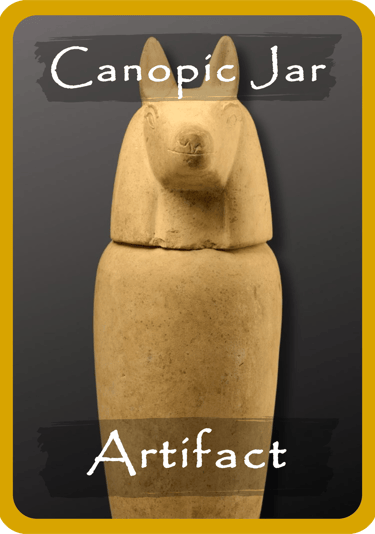
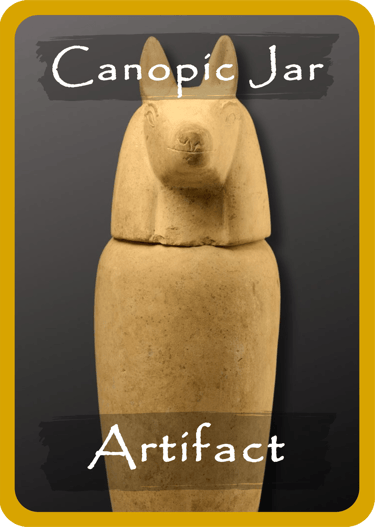
Canopic Jar
Canopic Jars were used during the mummification process to hold the organs of the deceased. Generally being made of limestone or earthenware pottery, these jars were dedicated to gods which were said to be the sons of Horus, and each representing a different cardinal direction: East, West, North, and South. The image chosen for The Valley of the Kings is a canopic jar made to resemble Anubis, the god of funerary rites and guide to the afterlife.
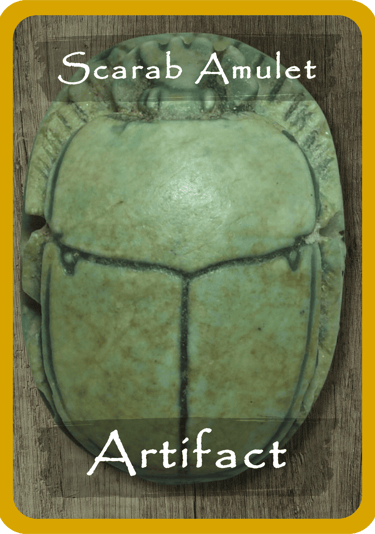
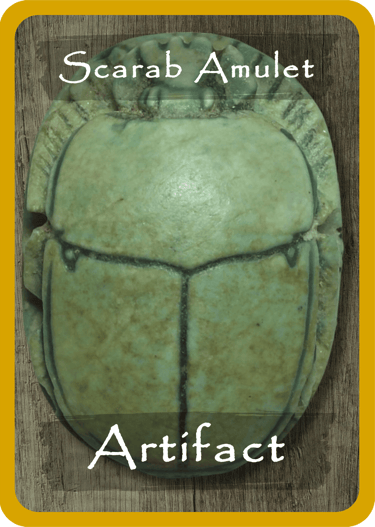
Scarab Amulet
The scarab has a religious significance to the Egyptian people, as the rolling of dung signified the rising and setting of the sun each day, as well as the cycle of life and death. With the importance of the sun to the Egyptian people being both a radiant bringer of life to let crops flourish as well as an unmerciful being capable of killing in hours, its no wonder that an insect that appeared to depict this cycle would be considered so sacred.
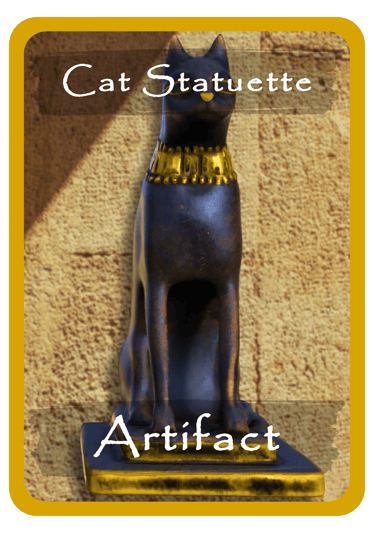
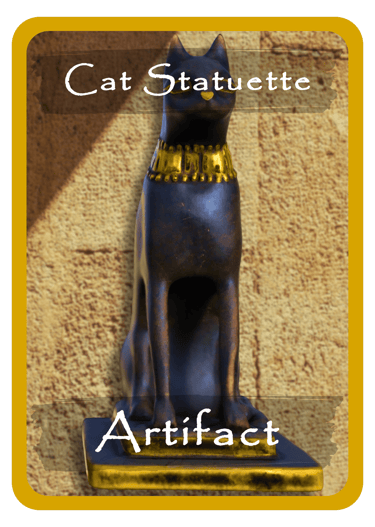
Cat Statuette
Cats were considered to be of great importance in ancient Egypt, likely due to their ability to hunt venomous snakes, as well as rodents and birds that damaged crops or stole food from granaries. Several gods were depicted as having a cat's head, and entire cemeteries dedicated to the Egyptians' small feline companions have been unearthed.
Pitfall
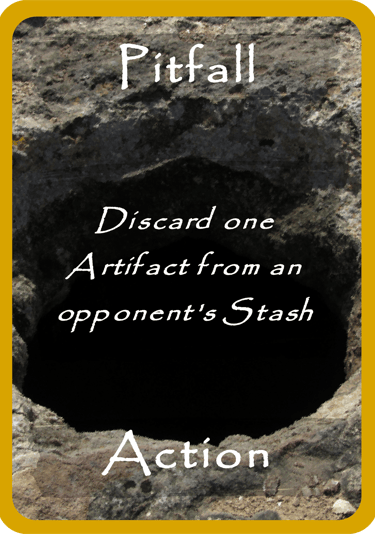
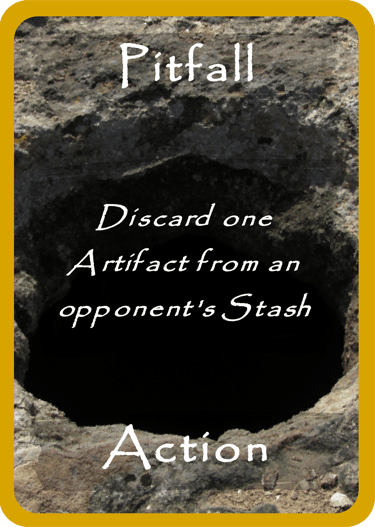
Deliberate booby traps were often built to deter and thwart graverobbers from plundering Egyptian tombs. While the real traps may seem a bit dull in comparison to what Hollywood often portrays them as, they were generally effective enough to deter lesser graverobbers, and even some archeologists, from exhuming these tombs. Such traps often existed as heavy slabs of granite, dummy empty chambers, piles of rubble, and as depicted in the image on the right, large hidden pits known as pitfalls.
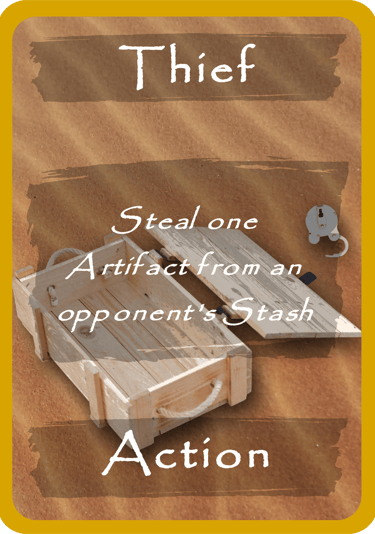
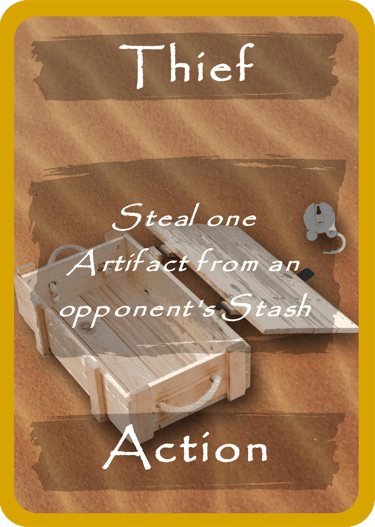
Thief
Thieves were and remain a problem for both allowing the deceased to rest in peace and archeologists to uncover historical sites and artifacts. It is not uncommon for unguarded or unsecured artifacts to go missing from such sites during archeological expeditions, as thieves often see these artifacts as a quick way to make some money by selling these artifacts to collectors on the black market.
Hieroglyphs
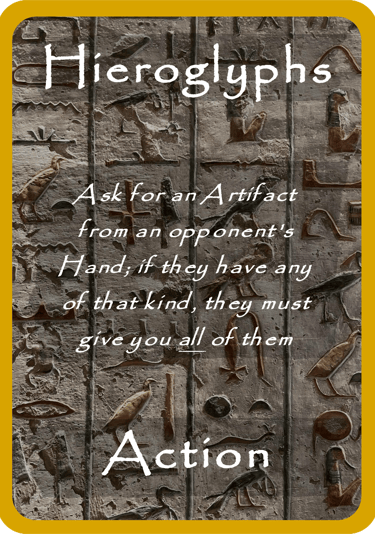
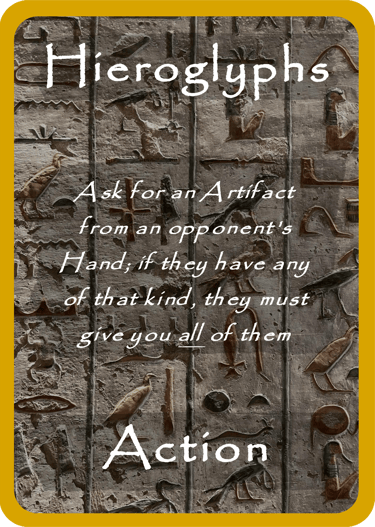
The written language used by the ancient Egyptians prior to Greek or Coptic writings used a system of symbols to depict specific words or meanings called hieroglyphs. The last use of these symbols in the old Kemetic (Egyptian) pantheon was sometime in the 3rd Century CE, and the writing system was lost for over a millennium until the 1820s, when an ancient stone that was written in Egyptian Hieroglyphics, Egyptian Demotic, and Ancient Greek, brought back to France by Napoleon, was deciphered. Today, the language can be read by scholars, and the literary works of the ancient Egyptians has been preserved for generations to come.
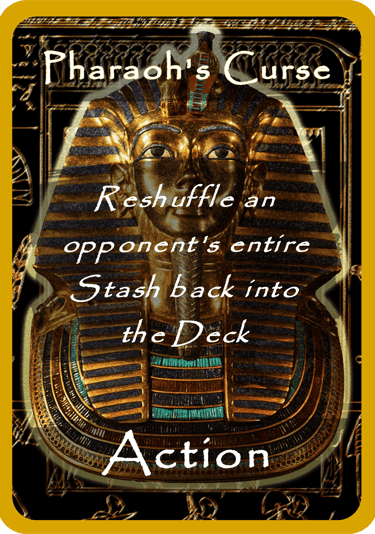
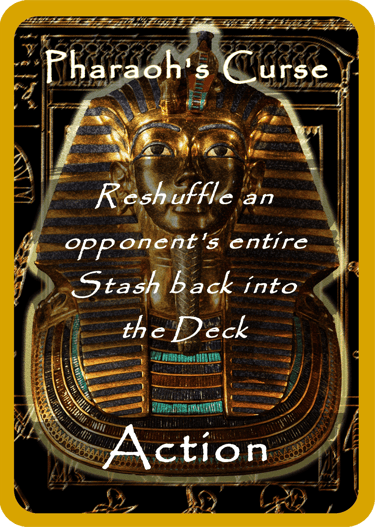
Pharaoh's Curse
Written or oral curses were often associated with the tombs of Egyptian nobility, with superstition being yet another method to prevent grave-robbers from entering ancient tombs. Possibly the most famous case of a "curse" that affected an archeologist was the curse placed on the tomb of Pharaoh Tutankhamun, which saw nine explorers die following the opening of the tomb. Despite popular belief, no curse was even found in the tomb, but due to the legends of curses placed on other tombs, the deaths were sensationalized and branded that of the work of the "Curse of King Tut's Tomb."
Eye of Horus
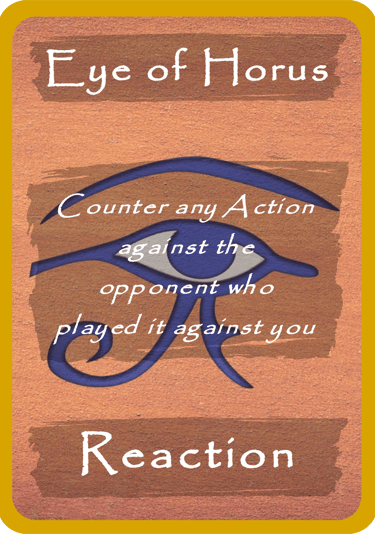
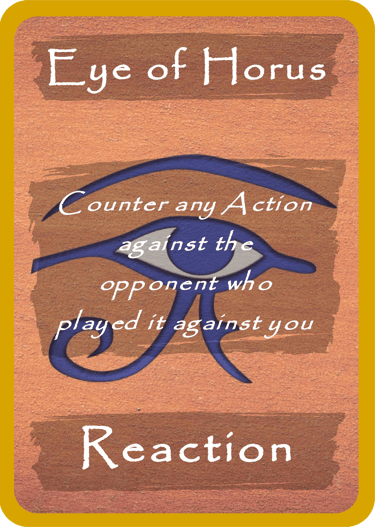
Horus, the god of protection, healing, and the sun and the sky, is one of many Egyptian gods in the Kemetic pantheo; he is often depicted as having the head of a falcon and the body of a human. The Eye of Horus is a symbol often used in the Egyptian mythos to represent protection or well-being, thus its use as a reaction to defend against hostile actions from another player.
Mummy
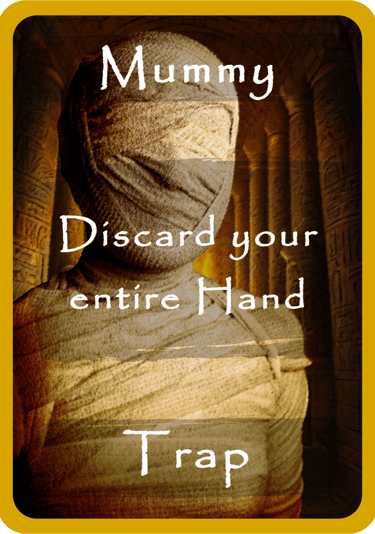
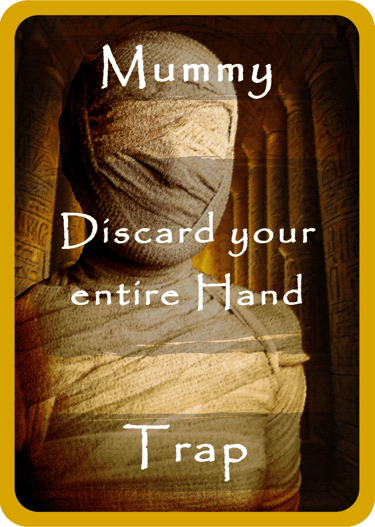
Mummification is the process of preparing a body for burial in a way that preserves a body so as to prevent large amounts of decomposition after death by removing most moisture from soft tissue. This process was often used for important individuals, and even some animals, in preparation for the Egyptian afterlife. The process was carried out by one or more priests, where the vital organs were removed and placed in canopic jars, while the body was drained of fluids and dried with salt before being wrapped in linen and placed in a coffin or sarcophagus. Because of the mysticism and uniqueness surrounding Egyptian mummification, Western media has presented mummies as a creepy or even scary creatures, despite the fact that they are just dead bodies.
Cobra
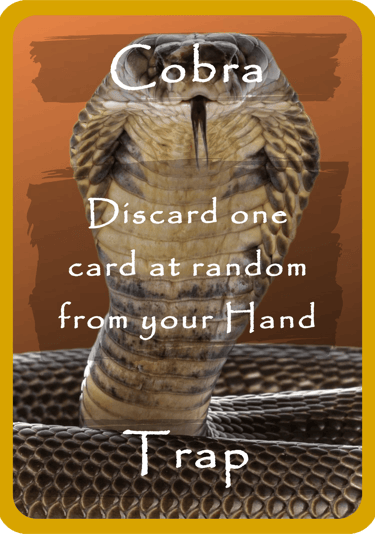
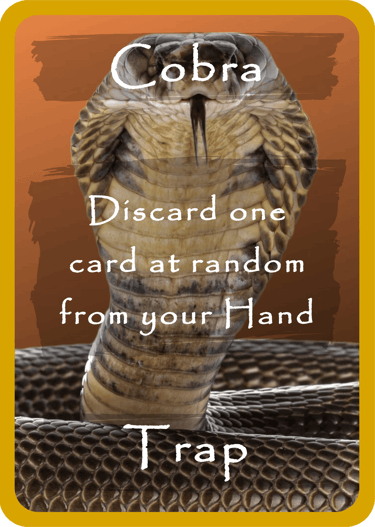
Venomous snakes are found throughout North Africa and the Levant, with several snakes posing a serious threat to human life if bitten. Among these are the Saharan Horned Viper, the Egyptian Carpet Viper, and the Egyptian Cobra, also called an Asp. Cleopatra was rumored to have committed suicide by having an Asp bite her before Octavian could capture her and her lover, Marc Antony.
Cave-In
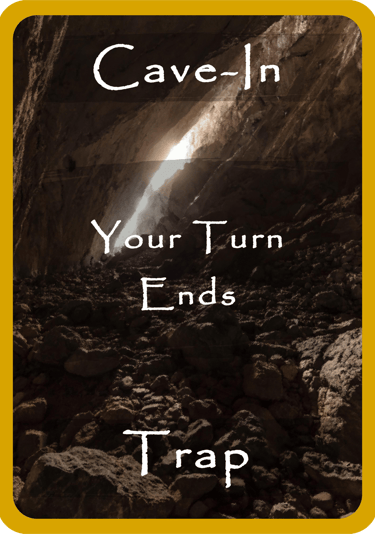
In addition to man-made booby traps, many tombs are also prone to cave-ins or other types of unintentional crumbling architecture that could pose risk to explorers, even causing death in some cases. This mainly stems from natural geological factors, such as components being made from limestone or movement from underground caves or rivers that could cause structures to shift or be damaged. Graverobbers taking structural components, such as statues, can also degrade the structural integrity of some buildings, which can cause collapses with time.
Fun Facts!
There is plenty left to learn about the sands of Egypt, but now it's time for the lighting round! Here are some fun facts about the desert nation.
Kemet is the Egyptian word for Egypt - Kemeticism is the native religious pantheon that the ancient Egyptians practiced
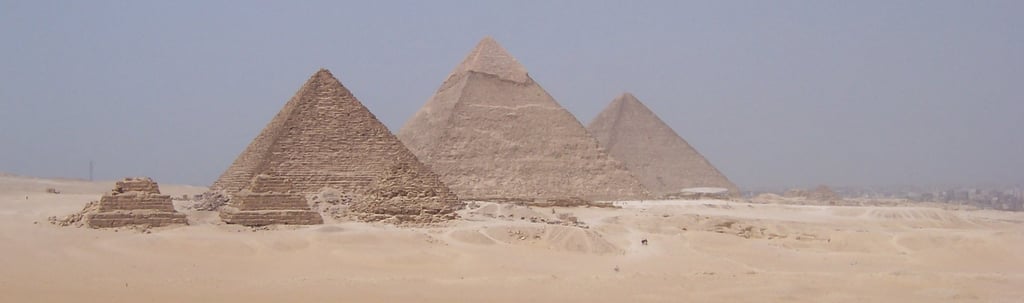
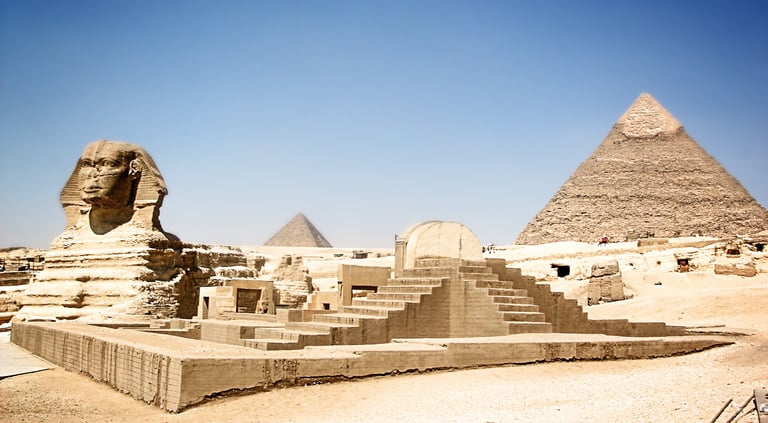
The Great Pyramids of Giza were originally smooth, with cut limestone and granite covering the outer walls, but time and plunderers have since reduced them to the lumpy masses we know today
The Kemetic pantheon has changed several times over the ages, with gods being renamed or replaced altogether, and the pharaoh even being considered a god-king at some points in time
Despite the names, Lower Egypt was actually north of Upper Egypt in the era of two kingdoms
The Great Pyramids of Giza are the only surviving wonder of the ancient world
The ancient Egyptians are so ancient that they were as old to the Romans as the Romans are to us today
Egypt has featured prominently in the history of the three Abrahamic religions: Judaism, Christianity, and Islam
The Nile River played an especially significant religious role to the ancient Egyptians, especially as it fueled nearly all agriculture in the region
Written documentation was an important innovation that Egypt has provided to the world, made possible by the creation of Papyrus - a flat, paper-like material made of hammered reeds
The Collapse of the Late Bronze Age may have contributed to the fall of the New Kingdom of Egypt, as many nations in the region did not weather the invasions of the "Sea People" and the apparent droughts that plagued the Near and Middle East
Push Forward, Explorers!
Egypt has a long and fascinating history, being near to an epicenter for a large portion of human history. There is far more to be said and to learn about this ancient place, and we at Velvet Games would like to encourage you to read more from the professionals who have done their homework and spend decades, or in some cases, even centuries learning about or even uncovering Egyptian history so that YOU can understand it better. Check out the links below to get started!


For a thorough breakdown of the history of ancient Egypt as we understand it, visit Britannica at the link below.
For a more interesting facts, artwork, and other museum collection pieces, visit Smithsonian Institute at the link below.
For a more in-depth information on Egypt from the experts who live and work there, visit the Egyptian Museum at the link below.